
Kitchen Tools · Reviewed
Katori Titanium Cutting Board Review: Is It Worth Buying?
Most cutting boards are a compromise: plastic dulls your knives and holds onto bacteria, wood needs constant oiling, and glass is hard on blades. The Katori Titanium Cutting Board tries to solve all three problems at once by swapping the usual materials for solid titanium. We spent time looking into what that actually means for everyday cooking.
What is the Katori Titanium Cutting Board?
The Katori board is a cutting board made from titanium rather than the plastic, bamboo, or wood used in most kitchens. Titanium is the same metal used in surgical instruments and aerospace parts, chosen for being strong, corrosion-resistant, and naturally non-porous — meaning liquids and bacteria can't soak into the surface the way they can with wood or plastic.
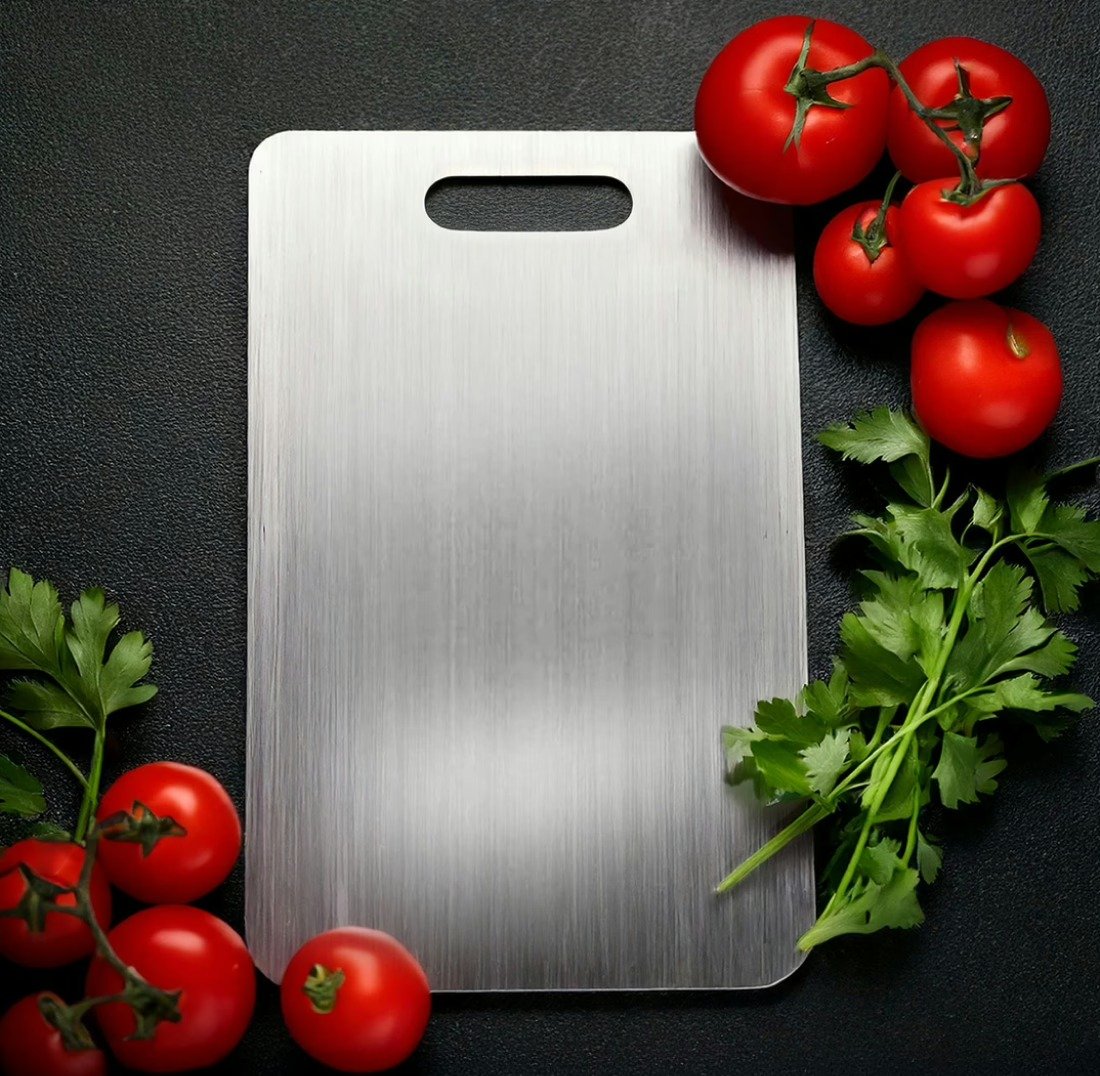
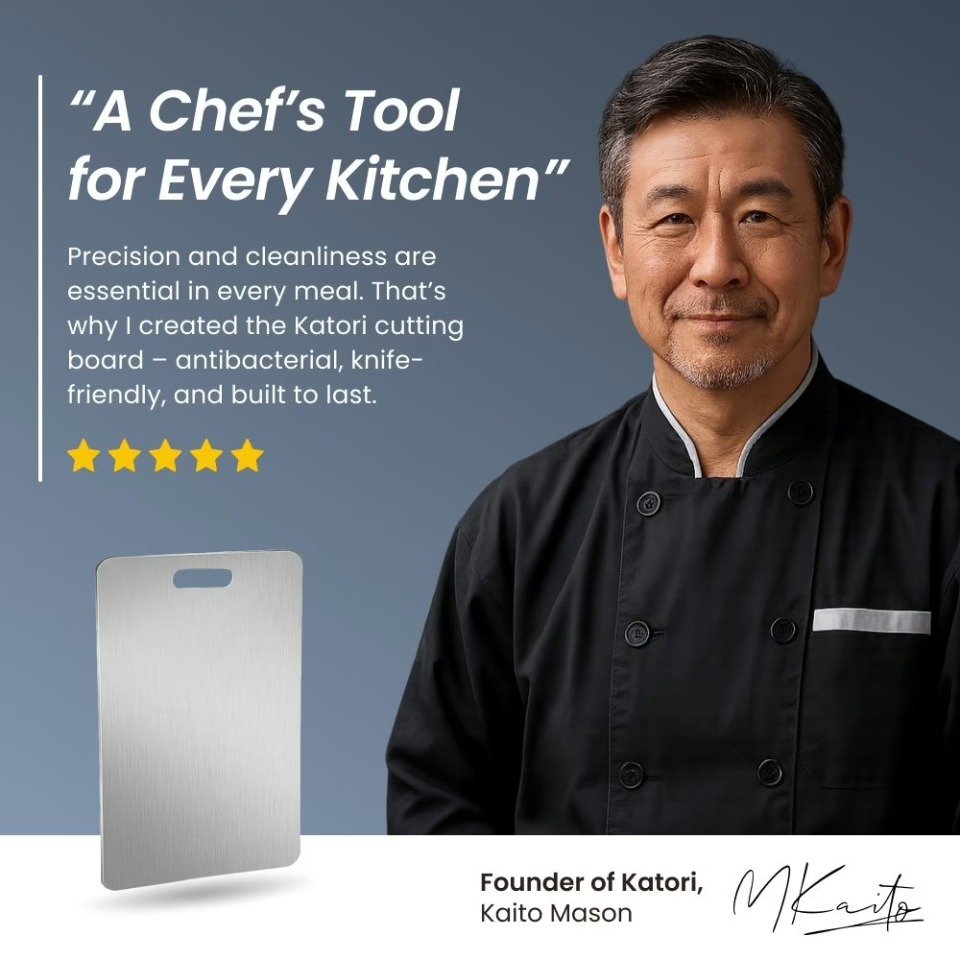
The board has a brushed metal finish, a cutout handle for easy carrying and hanging storage, and rounded edges. It's built as a single solid piece rather than a coated or laminated surface, which is part of why it holds up differently than boards that only look metallic.
Key features
- Solid titanium construction — not a coating or plated layer, so the surface doesn't wear off or chip over time.
- Non-porous surface — resists absorbing food odors, juices, and bacteria the way wood and some plastics do.
- Knife-friendly — titanium has enough give that it doesn't dull blade edges as quickly as glass or stone boards do.
- Easy to clean — wipes down quickly and can go in the dishwasher without warping.
- Built-in handle cutout — makes it easier to move around and hang for storage.
Pros and cons
What we liked
- Feels noticeably more durable than plastic boards
- Doesn't stain or hold onto smells (garlic, onion, fish)
- Simple to keep clean, even after raw meat prep
- Doubles as a serving or presentation board
Worth knowing
- Heavier than a plastic cutting board
- Metal-on-metal contact can be louder while chopping
- Premium material means a higher price than basic boards
Who it's a good fit for
This board makes the most sense for people who cook often and are tired of replacing warped, stained, or knife-scarred plastic boards every year. It's also a reasonable pick for anyone dealing with raw meat, fish, or garlic regularly, since those are the things that tend to leave odors and bacteria behind on porous surfaces. If you're an occasional cook looking for the cheapest possible option, a basic plastic board will still do the job — the appeal of titanium is longevity and hygiene, not price.
Bottom line: The Katori Titanium Cutting Board is a solid upgrade if you want a cutting board that won't stain, absorb odors, or need replacing every year. It costs more than a standard board, but the material is the whole point — it's built to be a one-time purchase rather than a recurring one.
You can check current pricing and availability on the official product page.
View the Katori Titanium BoardFrequently asked questions
Is titanium actually better than wood or plastic for cutting boards?
For hygiene, yes — titanium doesn't absorb liquids or bacteria the way wood and plastic can. For knife feel, it depends on preference: it's gentler on blades than glass or stone, though most cooks still find wood the softest surface to cut on.
Will it dull my knives?
Titanium is harder than wood or plastic, so there's slightly more wear on an edge over time than a wood board, but far less than cutting on glass, stone, or ceramic.
Is it dishwasher safe?
Yes. Because it's solid metal rather than a coated surface, it can go in the dishwasher without warping, cracking, or delaminating.
Does it smell like metal when cutting food?
No noticeable metallic taste or smell was picked up during testing with garlic, onion, and citrus — items that tend to react with lower-quality metal surfaces.
Disclosure: This page contains an affiliate link. If you make a purchase through it, Kitchen Gear Digest may earn a commission at no extra cost to you. This does not affect the opinions shared in this review.